PROGRAMMES
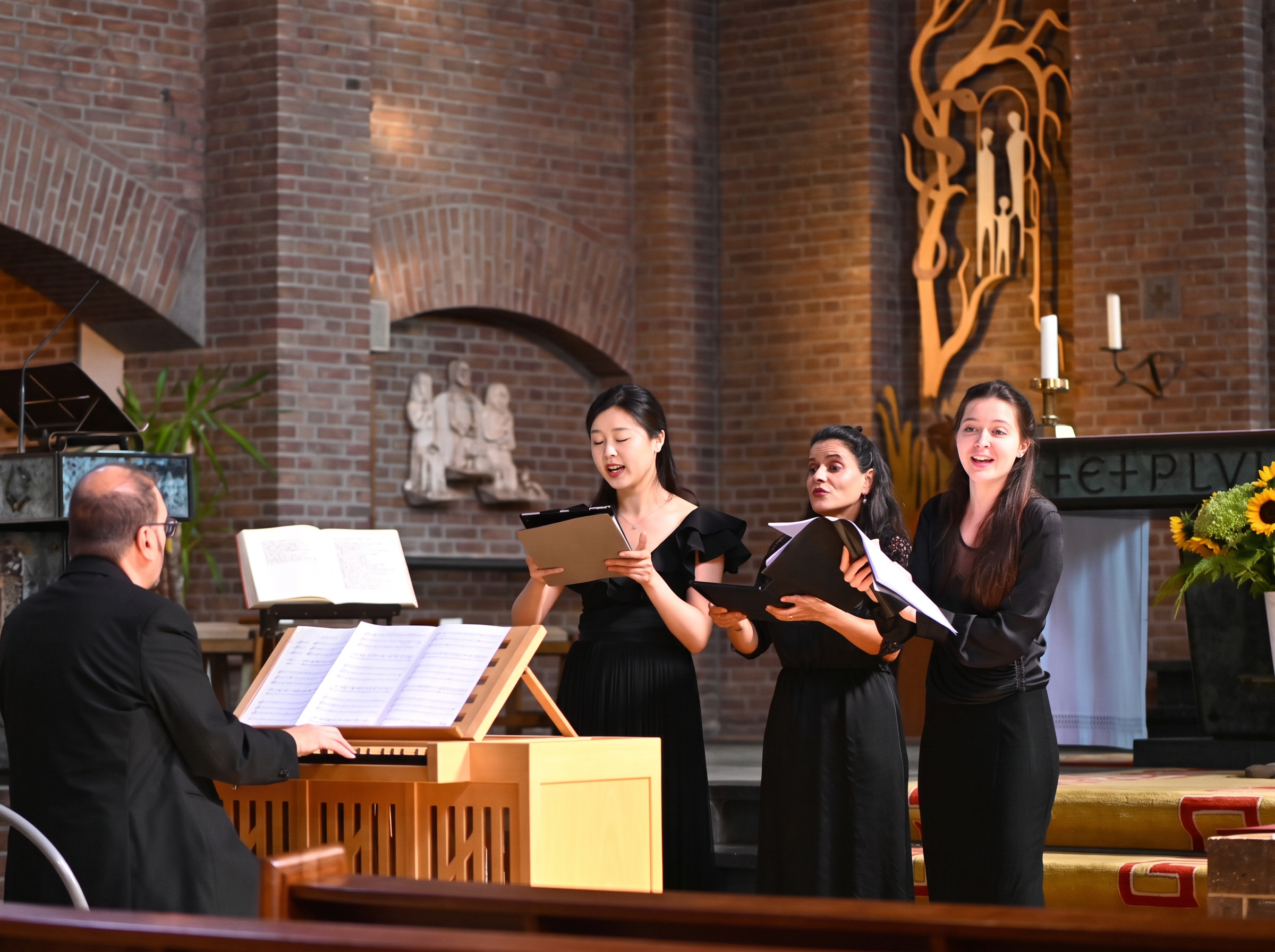
Monteverdiana
The many-voiced polyphony that prevailed throughout the Renaissance gave way at the end of the 16th century to clarity and the direct expression of emotions in melodies for solo singing and duets. Claudio Monteverdi stood at the forefront of this change. In his works he brought a new vision of the expressive possibilities of song: the music followed and accompanied the essence of each word with an unprecedented degree of intimacy and closeness.
The many-voiced polyphony that prevailed throughout the Renaissance gave way at the end of the 16th century to clarity and the direct expression of emotions in melodies for solo singing and duets.
Chiome d'oro
Ohimè dov'è il mio ben
Ut queant laxis
Non è di gentil core (finale)
This programme has been performed at Concerten bij Kaarslicht (Jisp, Netherlands 2024), Musica Antiqua Nova (Groningen, Netherlands 2025), Waalse Kerk (Amsterdam, Netherlands 2026), Kerkconcerten Vries (Vries, Netherlands 2026), Espazos Sonoros (La Coruña, Spain).
Ensaladas, Villancicos, Danzas y Cantigas
A concert can also be a journey through space and time, making you feel as if you were in the 16th century, walking through any European city, Seville for example. You hear the horse-drawn carts going through the streets and the voices of street vendors. From a house or a tavern comes the hubbub of a party. You hear people singing and dancing, shouting and laughing. You walk past the cathedral and catch fragments of chants. And perhaps your imagination is so stirred that you think you can smell incense, wax candles and orange trees…
A concert can also be a journey through space and time, making you feel as if you were in the 16th century, walking through any European city, Seville for example
La bomba (fragmento)
La Negrina (final)
Maravillosos et piadosos
Under the name "Capella Sancta Maria", we have performed this programme at Musica Antica da Camera (The Hague, Netherlands 2025) and Musica Antiqua Nova (Groningen, Netherlands 2025) and at the Waalse Kerk (Amsterdam, Netherlands).
Sonido en el Silencio
Sound in the Silence
In the past, one of the few doors left open to a woman who was single or widowed was convent life. A dowry was required, which was not within everyone's reach. Only one circumstance could exempt them: knowing how to sing or play an instrument. For many, music became the only way to express themselves. Although sacred music was part of the services, the secular repertoire also flourished. Polyphony, Gregorian chant and solo songs form the mosaic of this programme.
In the past, one of the few doors left open to a woman who was single or widowed was convent life. A dowry was required, which was not within everyone's reach. Only one circumstance could exempt them: knowing how to sing or play an instrument
Sapientia
Hodie
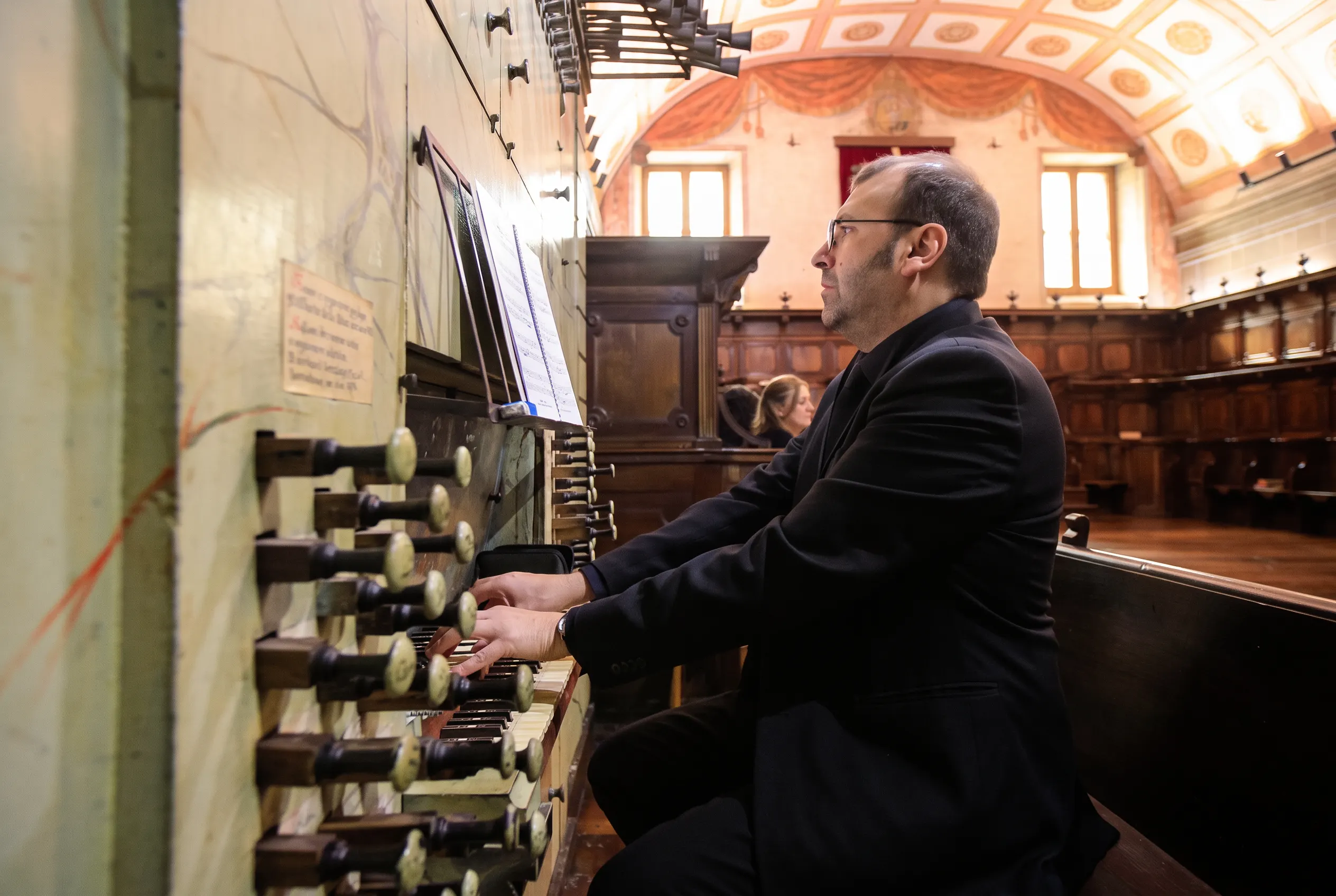 Foto: Juan Sebastián Rodríguez Moranta
This programme has been performed at the festivals De Lugares y Órganos (Santiago de Compostela, Spain 2023) and Via Musica (Lelystad, Netherlands 2024).
In preparation
Speck
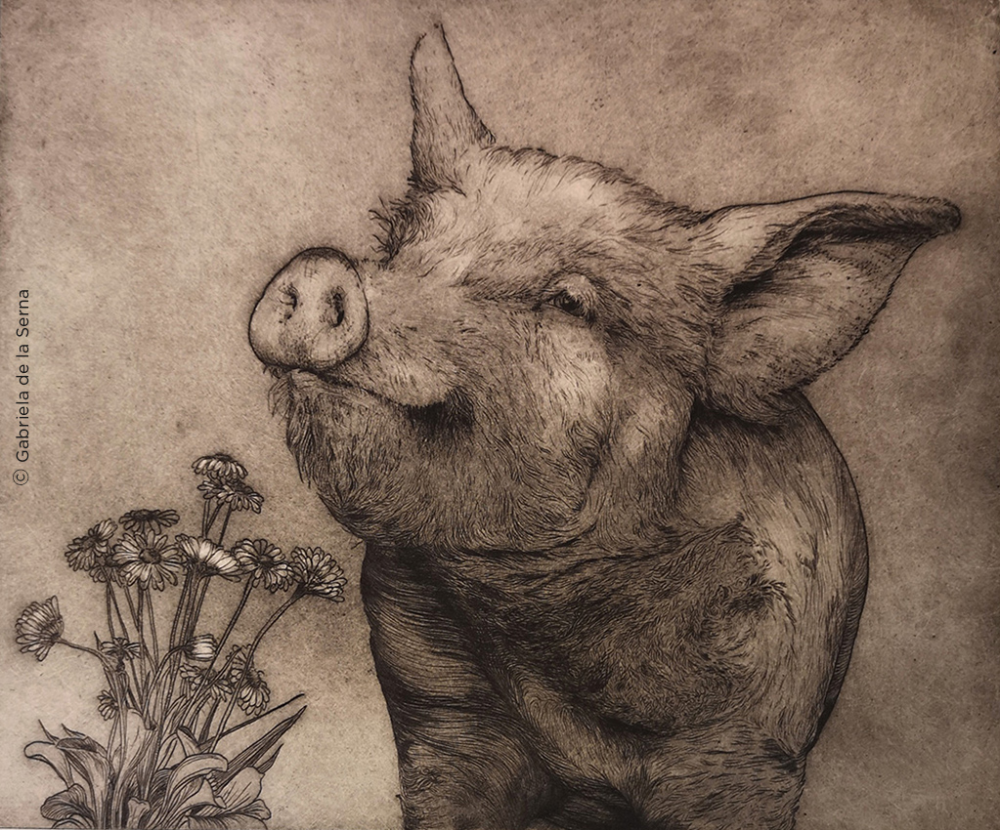
During the Eighty Years' War (1568-1648), the Dutch used the word speck (bacon, in English) as an insult against the Spanish. The origin is an ironic inversion: in Spain, Jews converted to Roman Catholicism were called marrano (pig). Thus the insult was returned in kind.
This programme presents music as a menu with flavours of both camps, compiled from two collections. On the Spanish side, works from the Codex Lerma (c. 1600), with madrigals by Striggio, chansons by Lassus, never-before-published villancicos (Spanish Christmas songs) by Guerrero and instrumental dances; on the Dutch side, works from the songbook Nederlandtsche Gedenck-clank (1627) by Adrian Valerius, which recounts events of the war, and works by Ruimonte.
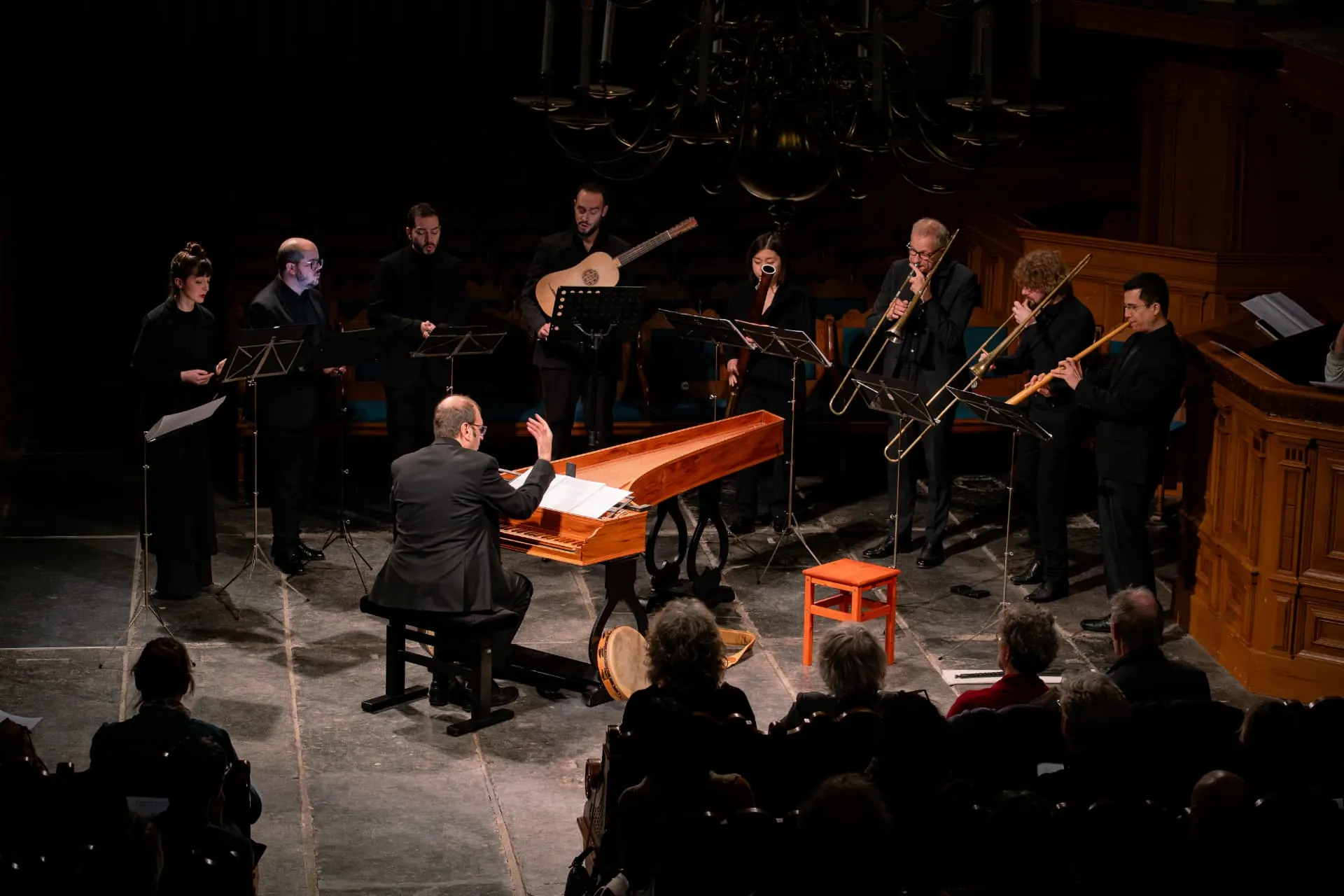
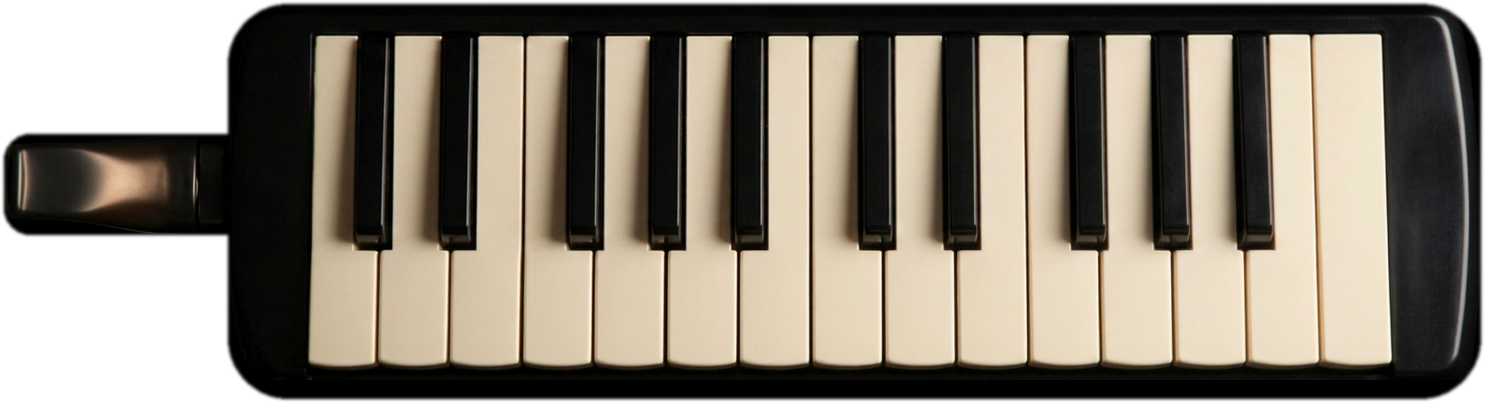
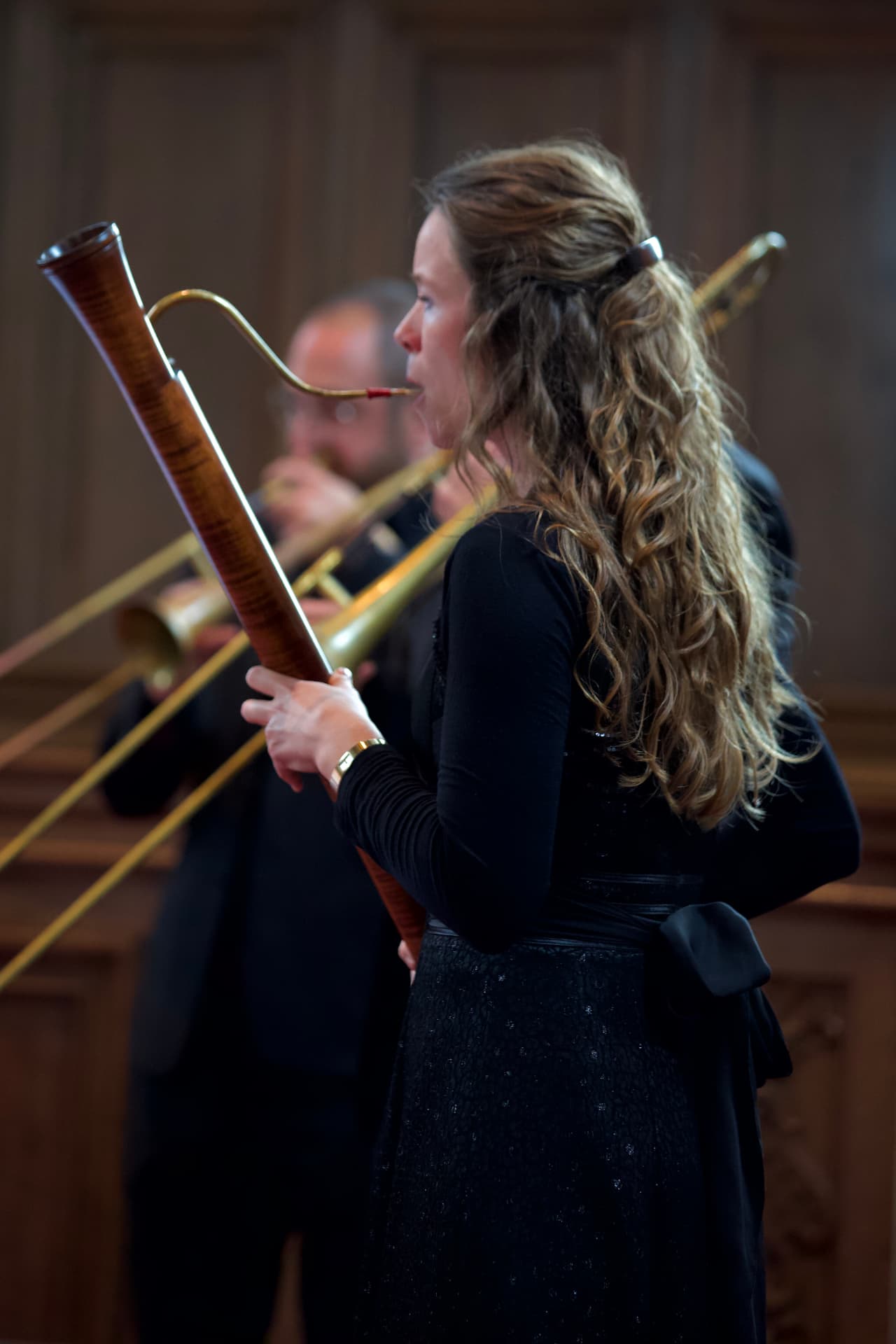
The line-up consists of six singers, cornetto, sackbuts, dulcian, harpsichord and percussion. To stretch the limits of historical performance practice, we accompany Valerius's songs with a contemporary instrument: the plastic melodica.
During the Eighty Years' War (1568-1648), the Dutch used the word speck (bacon, in English) as an insult against the Spanish. The origin is an ironic inversion: in Spain, Jews converted to Roman Catholicism were called marrano (pig). Thus the insult was returned in kind.
This programme presents music as a menu with flavours of both camps, compiled from two collections. On the Spanish side, works from the Codex Lerma (c. 1600), with madrigals by Striggio, chansons by Lassus, never-before-published villancicos (Spanish Christmas songs) by Guerrero and instrumental dances; on the Dutch side, works from the songbook Nederlandtsche Gedenck-clank (1627) by Adrian Valerius, which recounts events of the war, and works by Ruimonte.
The line-up consists of six singers, cornetto, sackbuts, dulcian, harpsichord and percussion. To stretch the limits of historical performance practice, we accompany Valerius's songs with a contemporary instrument: the plastic melodica.
Biographies
Reïna Lupa
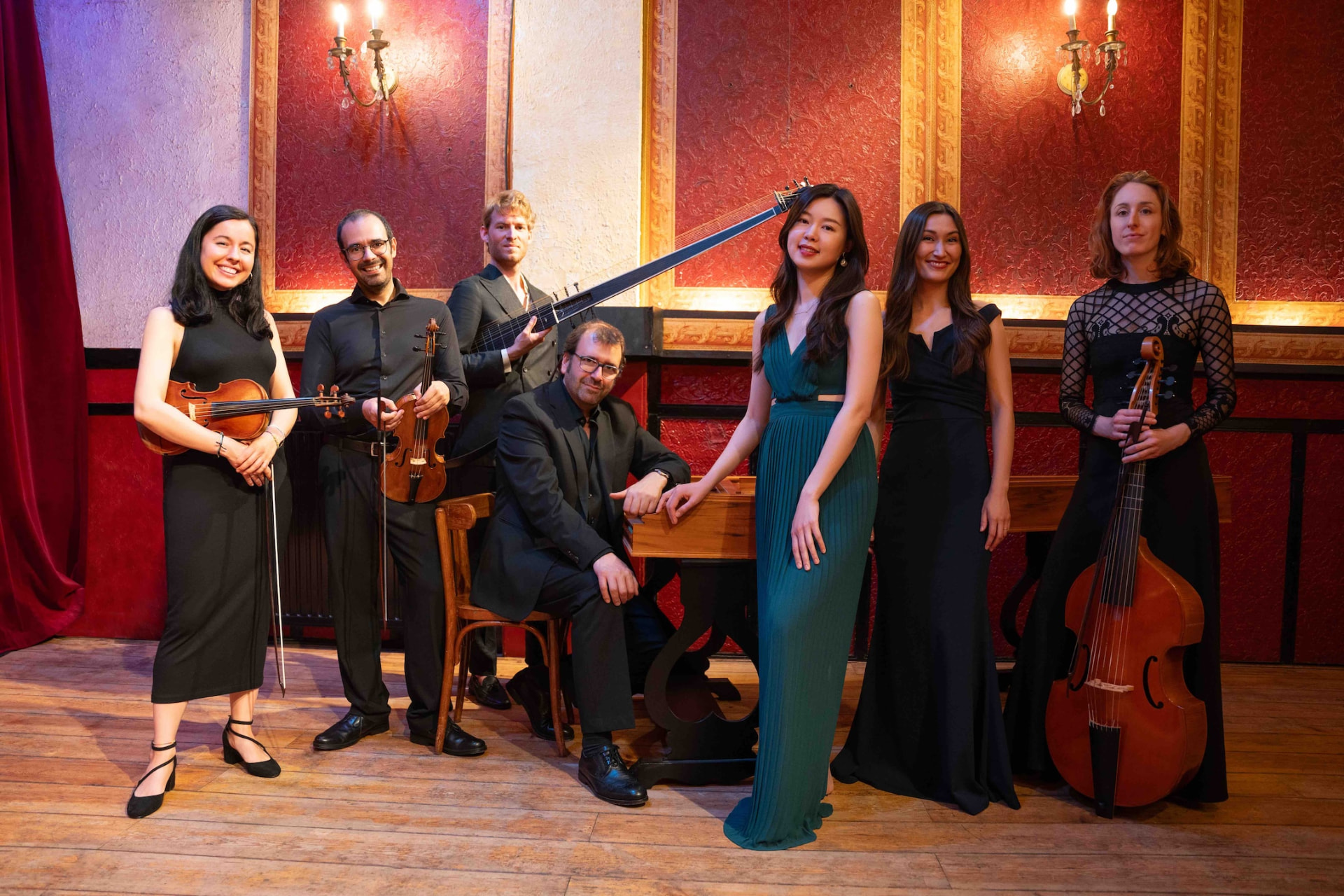
Based in Amsterdam, we are a vocal/instrumental ensemble specialising in medieval, Renaissance and Baroque music, with a special affinity for Spanish Renaissance polyphony and its Italian and Franco-Flemish orbits. We like eclectic and original programmes, and above all little-known works, or works by a named composer. Our line-up is flexible and versatile; we play original instruments, but we also like to explore the limits of what is "historically correct".
In our still short career we have performed at numerous festivals in the Netherlands, such as Musica Antiqua Nova (Groningen), Concerten bij Kaarslicht (Jisp), Kerkconcerten Vries (Vries), among others, and more recently in Spain, at Espazos Sonoros (La Coruña).
The name Reïna Lupa evokes the medieval Galician tradition, which describes Queen Lupa —or Luparia— as a strong woman of character. According to legend, it was she who helped bury the apostle James in the place now occupied by the Cathedral of Compostela.
+ info about the legend
Based in Amsterdam, we are a vocal/instrumental ensemble specialising in medieval, Renaissance and Baroque music, with a special affinity for Spanish Renaissance polyphony and its Italian and Franco-Flemish orbits. We like eclectic and original programmes, and above all little-known works, or works by a named composer. Our line-up is flexible and versatile; we play original instruments, but we also like to explore the limits of what is "historically correct"
Enrique López-Cortón
artistic and musical leader
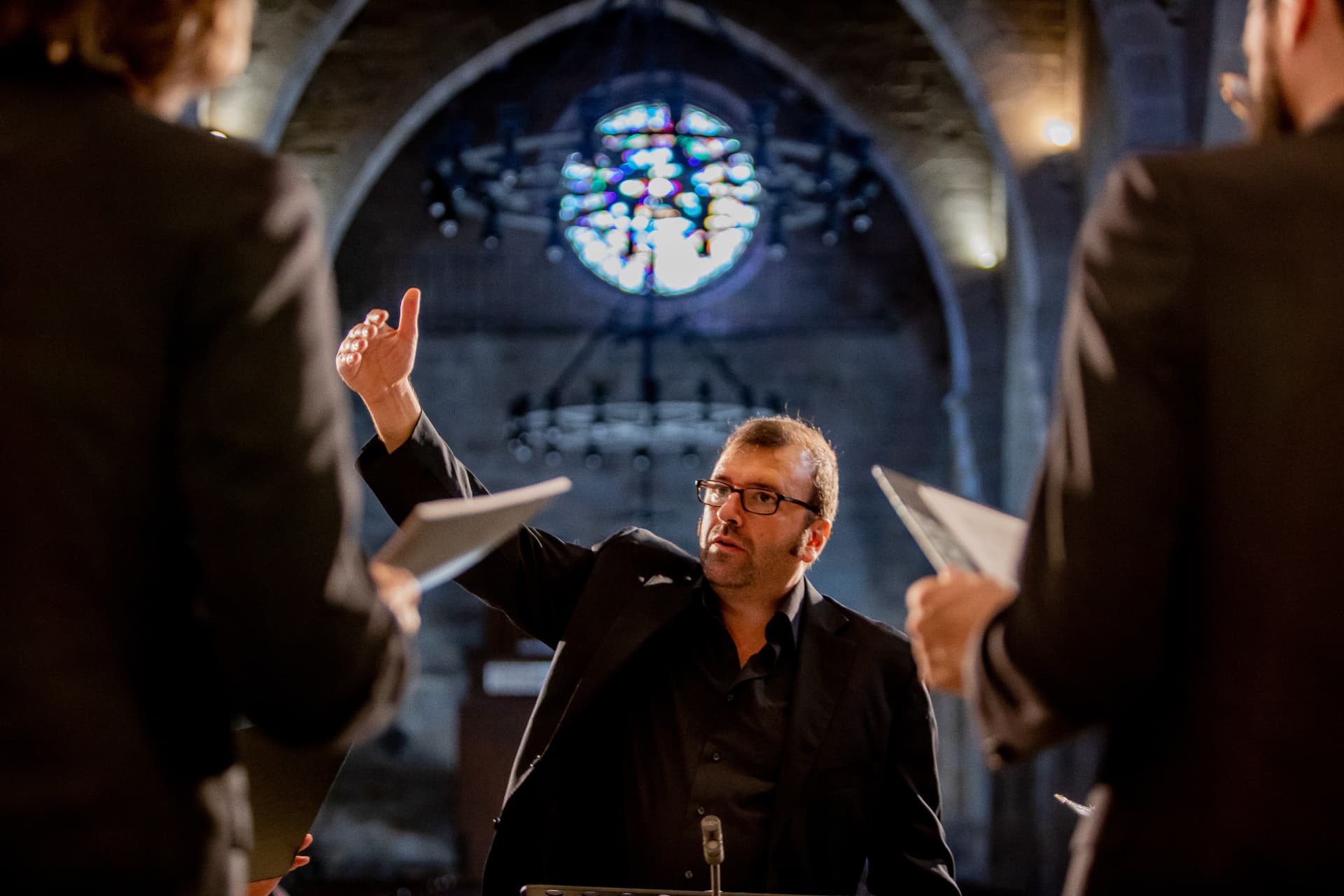
Since I arrived in Amsterdam in 1999, the study and performance of Renaissance polyphony has been an essential part of my training and of my musical life. I am also lucky enough to perform a very wide and varied repertoire, from Gregorian chant to contemporary works for choir and orchestra such as My Way of Life by Toru Takemitsu or the Te Deum by Arvo Pärt.
I started playing the piano very early, and at the age of seven I entered the Conservatory of La Coruña. Once I had obtained my teaching diploma, I moved to Barcelona for advanced piano studies, gaining my M.Mus at the Conservatory of Badalona with David Padrós and Assumpta Coma.
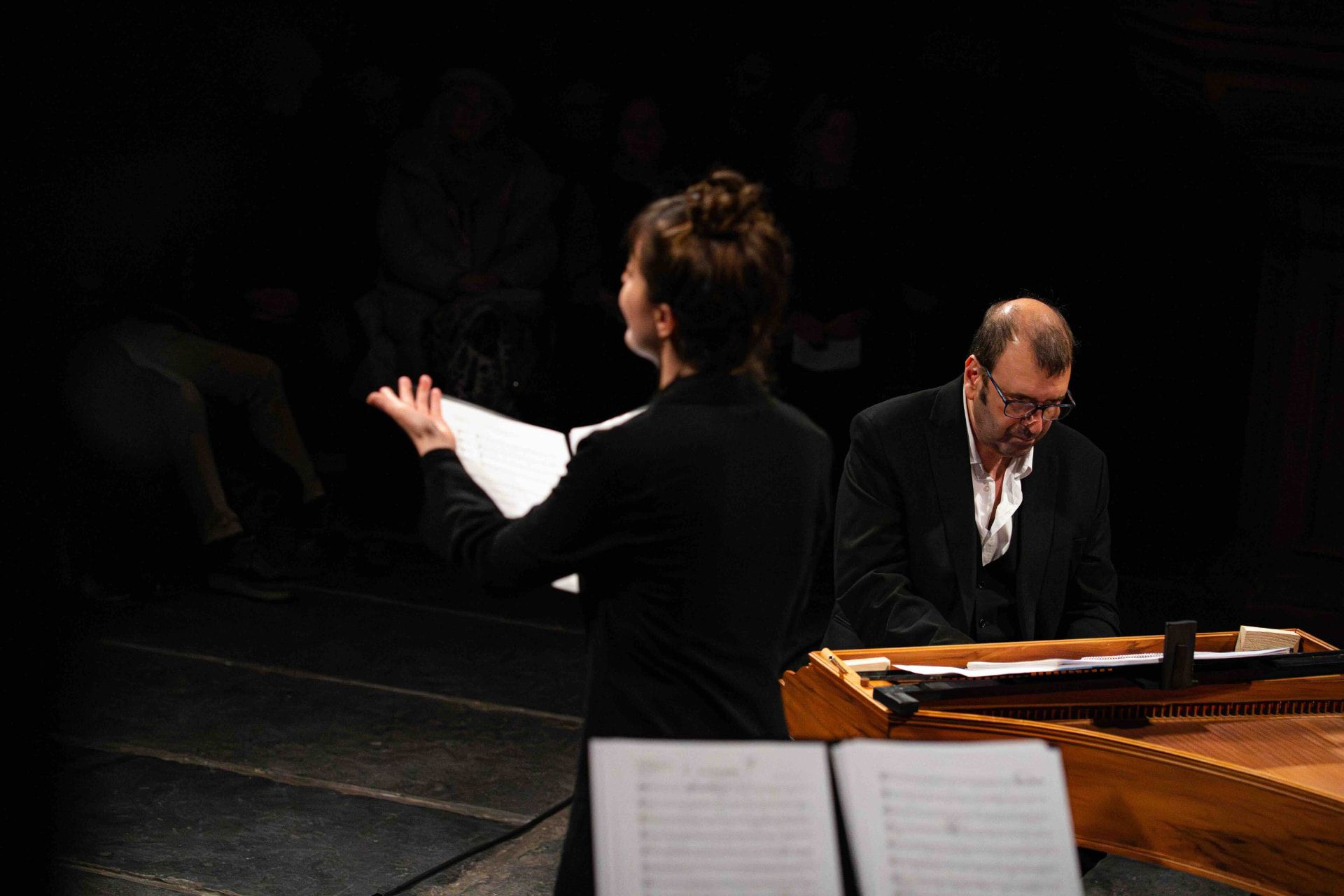
Since I arrived in Amsterdam in 1999, the study and performance of Renaissance polyphony has been an essential part of my training and of my musical life. I am also lucky enough to perform a very wide and varied repertoire, from Gregorian chant to contemporary works for choir and orchestra such as My Way of Life by Toru Takemitsu or the Te Deum by Arvo Pärt
In Barcelona I had a fascinating experience singing in Manuel Cabero's choir, and it changed the course of my career for good. I began working as a choral conductor, attending his courses, together with Pep Vila and Mireia Barrera. In 1999, with a grant from the Diputación de La Coruña, I moved to Amsterdam for a postgraduate degree in choral conducting at the Conservatorium van Amsterdam. Later I went on to study orchestral conducting with Jurjen Hempel, voice with Xenia Meijer and Claron McFadden, and in Tilburg, Gregorian chant and medieval and Renaissance polyphony with Dr Rebecca Stewart.
In 2003 I founded the early music ensemble Capella Sancta Maria, performing at festivals such as Via Musica (Netherlands), Festival de Música Antigua de Sevilla (Spain), Festival Internacional de Arte Sacro (Spain), Espazos Sonoros (Santiago de Compostela) and De Lugares y Órganos (Santiago de Compostela). Since 2023 I have continued my work as artistic director of Reïna Lupa. I am also conductor in Amsterdam of the choir Ralph Sordo and the Amsterdamse Bachvereniging.
More information: www.enriquelopez.nl